Top 10 Best Sales Forecasting Tools for Accurate Revenue Projections in 2024
Discover the top 10 sales forecasting software and tools for accurate revenue projections in 2024. Optimize your sales forecasting with the best software solutions available.
 Toe Wai Shan
Mastering Sales Forecasting: Your Guide to the Best Tools and Techniques
Sales forecasting is a critical component of any successful business strategy. Accurate forecasts can significantly impact your company's ability to plan, allocate resources, and achieve sales targets. This article delves into the best sales forecasting tools and methods, providing insights on how to create a reliable sales forecast. Whether you're new to sales forecasting or looking to refine your approach, this guide is packed with valuable information.
Article Outline
- What is a Sales Forecast and How Does It Work?
- Types of Sales Forecasting Methods
- The Importance of Accurate Sales Forecasting
- Best Sales Forecasting Tools and Software for Your Business
- How to Choose the Right Sales Forecasting Tool
- Implementing a Sales Forecasting Solution
- Common Challenges in Sales Forecasting
- Improving Sales Forecasting Accuracy
- Integrating AI-Powered Sales Forecasting Tools
- Future Trends in Sales Forecasting
What is a Sales Forecast and How Does It Work?
Sales forecasting is the process of estimating future sales. Businesses use sales forecasts to determine future revenue, plan resources, and set realistic sales targets. Accurate forecasts can guide decision-making, helping sales leaders allocate budgets, manage inventory, and develop effective sales strategies.
Understanding Sales Forecasting
At its core, sales forecasting involves predicting future sales based on historical sales data and market analysis. This process can be as simple as a rough estimate or as complex as using advanced algorithms and AI-powered forecasting tools.
Importance of Sales Forecasting
Accurate sales forecasting helps businesses avoid underestimating or overestimating demand. An accurate forecast ensures that you have the right amount of inventory, helps in managing the sales pipeline effectively, and aids in setting realistic sales targets.
Types of Sales Forecasting Methods
There are various methods to forecast sales, each with its strengths and weaknesses. Understanding these methods is crucial for choosing the right approach for your business.
Quantitative Sales Forecasting Methods
Quantitative forecasting uses historical sales data to predict future sales. This method includes techniques such as time series analysis and regression analysis. It's best suited for businesses with substantial past sales data.
Qualitative Sales Forecasting Methods
Qualitative forecasting relies on expert opinions and market research rather than historical sales data. It's useful for new products or markets where past sales data is not available.
Pipeline Forecasting Methods
Pipeline forecasting focuses on the sales pipeline, analyzing current sales activities and opportunities to predict future sales. This method is particularly effective for businesses with a well-defined sales process.
The Importance of Accurate Sales Forecasting
Accurate sales forecasting is essential for effective sales planning and resource management. It impacts various aspects of a business, from inventory management to financial planning.
Benefits of Accurate Sales Forecasting
- Resource Allocation: Ensures optimal use of resources by predicting demand accurately.
- Financial Planning: Helps in budgeting and financial projections.
- Inventory Management: Prevents overstocking or stockouts, improving operational efficiency.
Challenges of Inaccurate Sales Forecasting
Inaccurate sales forecasts can lead to misallocated resources, missed sales opportunities, and financial losses. It's crucial to invest in reliable sales forecasting tools and methods to minimize these risks.
Best Sales Forecasting Tools and Software for Your Business
Choosing the right sales forecasting tool can significantly enhance forecasting accuracy. Here are some top tools to consider:
Salesforce Sales Cloud
Salesforce Sales Cloud is a comprehensive CRM platform that includes powerful sales forecasting features. It integrates seamlessly with other Salesforce tools, providing a holistic view of your sales pipeline and helping sales teams make informed decisions.
HubSpot Sales Hub
HubSpot Sales Hub offers robust sales forecasting capabilities, along with CRM and sales automation tools. It's known for its user-friendly interface and integration capabilities.
Pipedrive Sales Forecasting Tool
Pipedrive is a sales CRM that focuses on pipeline management and forecasting. It's ideal for small to medium-sized businesses looking for an intuitive and affordable sales forecasting solution.
For more information on automating your sales processes, check out our products page.
Here is a video in you can forecast through Microsoft Excel:
How to Choose the Right Sales Forecasting Tool
Selecting the best sales forecasting software for your business involves considering several factors. Here’s a guide to help you make an informed decision:
Key Features to Look For in Sales Forecasting Tools
- Integration: Ensure the software integrates with your existing CRM and sales tools.
- User-Friendliness: The software should be easy to use and understand for all team members.
- Advanced Analytics: Look for tools that offer advanced analytics and AI-powered forecasting capabilities.
Evaluating Your Needs for Sales Forecasting
Consider your business size, sales process complexity, and budget when choosing a sales forecasting tool. A small business might benefit from a simple, affordable tool, while larger enterprises may need more advanced features.
For a seamless integration with your sales processes, conside registering with our platform here.
Implementing a Sales Forecasting Solution
Implementing a sales forecasting solution involves several steps, from selecting the right tool to training your sales team. Here’s a step-by-step guide:
Step 1: Choose the Right Sales Forecasting Tool
Evaluate different sales forecasting tools based on your business needs and budget. Look for features like integration capabilities, ease of use, and advanced analytics.
Step 2: Set Up the Sales Forecasting Software
Once you've chosen a tool, set it up by integrating it with your CRM and other sales tools. Configure the settings to match your sales process and data requirements.
Step 3: Train Your Sales Team on Sales Forecasting Software
Ensure your sales team is well-trained on how to use the new tool. Provide comprehensive training sessions and resources to help them get the most out of the software.
Step 4: Monitor and Adjust the Sales Forecast
Regularly monitor the performance of your sales forecasting tool and make adjustments as needed. Collect feedback from your sales team to identify any issues and improve the forecasting process.
Common Challenges in Sales Forecasting
Sales forecasting is not without its challenges. Here are some common obstacles and how to overcome them:
Data Quality in Sales Forecasting
Poor sales data quality can significantly impact forecasting accuracy. Ensure your sales data is clean, accurate, and up-to-date.
Market Volatility and Sales Forecasts
Rapid market changes can make forecasting difficult. Use flexible forecasting methods and tools that can adapt to changing market conditions.
Sales Team Buy-In for Sales Forecasting
Getting your sales team to buy into the forecasting process can be challenging. Involve them in the tool selection and implementation process to ensure their commitment.
Improving Sales Forecasting Accuracy
Accurate sales forecasting requires continuous improvement. Here are some tips to enhance forecasting accuracy:
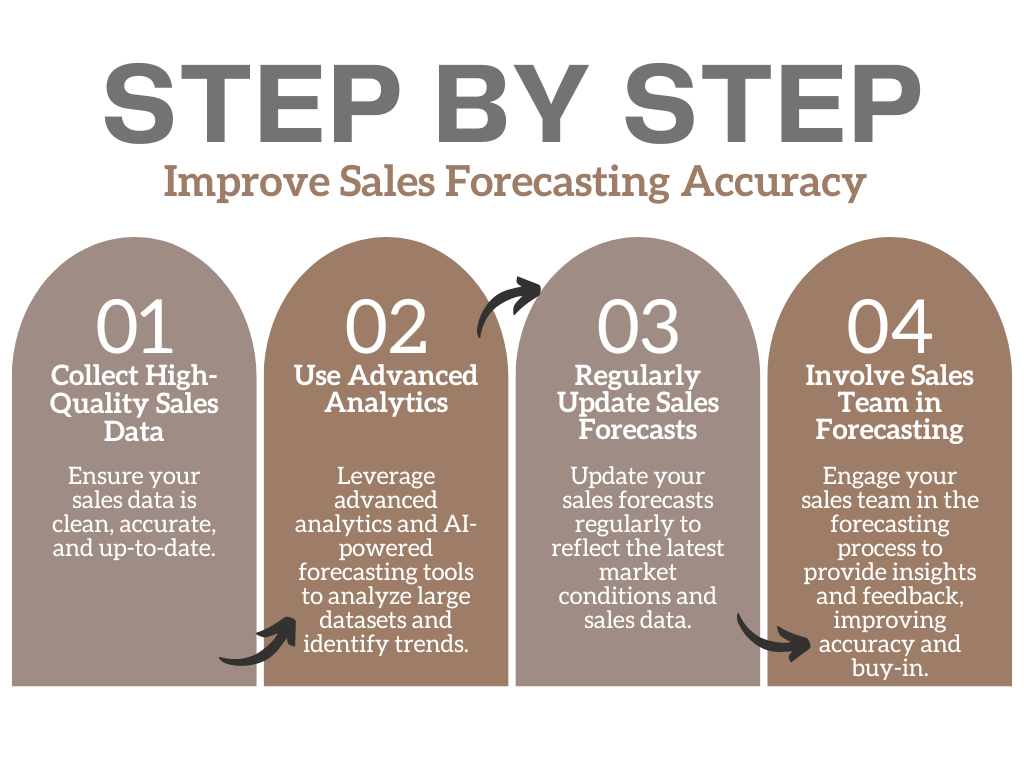
Use Advanced Analytics in Sales Forecasting
Leverage advanced analytics and AI-powered forecasting tools to analyze large datasets and identify trends. This can help predict future sales with greater precision.
Regularly Update Sales Forecasts
Regularly update your sales forecasts to reflect the latest market conditions and sales data. This ensures your forecasts remain accurate and relevant.
Involve Your Sales Team in the Sales Forecasting Process
Involve your sales team in the forecasting process. Their insights and feedback can help improve forecasting accuracy and buy-in. This also helps in providing a realistic sales perspective.
Here is a flow chart to help visualize improving sales forecasting accuracy:
Integrating AI-Powered Sales Forecasting Tools
AI-powered forecasting tools offer advanced capabilities that can significantly enhance forecasting accuracy. Here’s how to integrate them into your sales process:
Benefits of AI-Powered Sales Forecasting
- Enhanced Accuracy: AI can analyze large datasets and identify patterns that humans might miss.
- Real-Time Insights: AI provides real-time insights into your sales pipeline and market conditions.
- Automation: AI can automate repetitive tasks, freeing up your sales team to focus on more strategic activities.
How to Integrate AI Sales Forecasting Tools
- Choose the Right AI Sales Forecasting Tool: Select an AI-powered forecasting tool that integrates with your existing sales tools and processes.
- **Train Your Team on AI-Powered Forecasting: Provide training to your sales team on how to use the new AI tool effectively.
- Monitor Performance of AI Sales Forecasting Tools: Regularly monitor the performance of the AI tool and make adjustments as needed.
Future Trends in Sales Forecasting
Sales forecasting is constantly evolving. Here are some future trends to watch:
Increased Use of AI and Machine Learning in Sales Forecasting
AI and machine learning will play an increasingly important role in sales forecasting, offering more accurate and real-time insights.
Greater Integration with CRM Tools for Sales Forecasting
Sales forecasting tools will become more integrated with CRM and other sales tools, providing a seamless experience for sales teams.
Focus on Predictive Analytics in Sales Forecasting
Predictive analytics will become more prevalent, allowing businesses to forecast sales with greater accuracy and make more informed decisions.
Sales Forecasting in Practice
Sales forecasting is the process that helps businesses predict future sales and plan accordingly. Effective sales strategies rely on accurate forecasts to ensure resources are used efficiently and goals are met. Utilizing the best sales forecasting tools can enhance this process, providing insights into future sales and helping companies to set realistic sales targets. Historical sales data, current sales activities, and various sales forecasting methods play crucial roles in building a sales forecast that is both reliable and actionable.
Incorporating AI-powered forecasting tools can further improve sales forecasting accuracy by analyzing large datasets and identifying patterns that might be overlooked by human analysts. These tools can provide real-time insights and automate many of the tasks involved in the forecasting process, allowing sales teams to focus on strategic planning and execution. When selecting the right sales forecasting software, it's essential to consider integration capabilities, user-friendliness, and the availability of advanced analytics.
Sales pipeline forecasting and qualitative forecasting are just a couple of the types of sales forecasting that can be employed depending on the business needs and available data. The integration of historical sales forecasting tools with current sales data can provide a comprehensive picture of expected future sales, aiding in more effective sales planning and management.
Sales teams need tools that not only help predict future sales but also provide sales pipeline visibility and forecasting features that can drive more accurate sales predictions. Best sales forecasting software should offer robust capabilities for analyzing past sales data, estimating future sales revenue based on current trends, and setting realistic sales targets.
Regularly updating sales forecasts and involving the sales team in the process ensures that the forecasts remain relevant and accurate. Effective forecasting can significantly improve sales performance, helping businesses to avoid the pitfalls of over or underestimating future sales.
By leveraging advanced sales forecasting tools and techniques, companies can gain valuable insights into their sales pipeline, improve their forecasting accuracy, and ultimately drive better business outcomes. Whether through AI-powered solutions or traditional forecasting methods, the goal remains the same: to provide sales teams with the tools and insights they need to succeed.
To learn more about how our solutions can help your business, visit our home page.
Key Takeaways
- Sales forecasting is essential for effective sales planning and resource management.
- Understanding the different types of sales forecasting methods can help you choose the right approach for your business.
- Accurate sales forecasting can significantly impact your business’s ability to achieve sales targets and manage resources effectively.
- Choosing the right sales forecasting tool involves considering factors like integration capabilities, ease of use, and advanced analytics.
- Implementing a sales forecasting solution requires careful planning and training for your sales team.
- Continuous improvement and leveraging advanced analytics and AI-powered tools can enhance forecasting accuracy.
- Future trends in sales forecasting include increased use of AI and machine learning, greater integration with CRM tools, and a focus on predictive analytics.
By mastering sales forecasting, you can set your business on a path to success, ensuring you’re well-prepared to meet future sales targets and navigate market changes effectively.
Additional Resources
Boost Your Sales with a Custom Objection Handling Guide Navigating customer hesitations is one of the toughest parts of closing a deal. Every salesperson has faced pushback like "It’s too pricey" or "We’re not ready yet," and fumbling the response can cost you the sale. That’s where a tailored strategy for overcoming sales objections comes in handy. With the right approach, you can turn doubts into dialogue and build trust with prospects.
Why Personalized Responses Matter Generic scripts often fall flat because they don’t address the unique concerns of your audience. A custom guide to handling customer pushback ensures you’re speaking directly to their pain points, whether you’re pitching to a scrappy startup or a cautious enterprise. By focusing on the specific context of your product and market, you can reframe concerns as opportunities to showcase value. Imagine walking into every sales call armed with sharp, relevant comebacks that feel authentic.
Elevate Your Sales Game Don’t let objections derail your momentum. Equip yourself with tools that help you respond with confidence and clarity. A little preparation goes a long way in transforming hesitant prospects into loyal customers, and it all starts with understanding their perspective. FAQs How does this tool customize responses to my sales situation? Our Sales Objection Handling Guide Generator asks for specific inputs about your product or service, target customers, and the objections you’re facing.
Using this info, it creates a guide that feels personal and relevant, with responses that match the tone and context of your sales conversations. It’s like having a seasoned sales coach tweak your pitch on the fly! Can I use this tool for any type of product or industry? Whether you’re selling software, consulting services, or physical products, this tool adapts to your needs. Just provide details about what you offer and who you’re selling to, and it’ll generate objection-handling strategies that fit.
It’s built to be flexible across industries, from tech to retail and beyond. Is the output professional enough for client-facing conversations? Yes, we’ve designed the responses to strike a balance between professional and conversational. Each strategy is crafted to sound natural, like something you’d say in a real discussion, while still highlighting the value of your offer. You can use these directly in meetings or tweak them to match your personal style.
{"@context":"https://schema.org","@type":"FAQPage","mainEntity":[{"@type":"Question","name":"How does this tool customize responses to my sales situation?","acceptedAnswer":{"@type":"Answer","text":" Our Sales Objection Handling Guide Generator asks for specific inputs about your product or service, target customers, and the objections you’re facing. "}},{"@type":"Question","name":"Can I use this tool for any type of product or industry?","acceptedAnswer":{"@type":"Answer","text":" Absolutely!
"}},{"@type":"Question","name":"Is the output professional enough for client-facing conversations?","acceptedAnswer":{"@type":"Answer","text":" Yes, we’ve designed the responses to strike a balance between professional and conversational.
 TW
TW